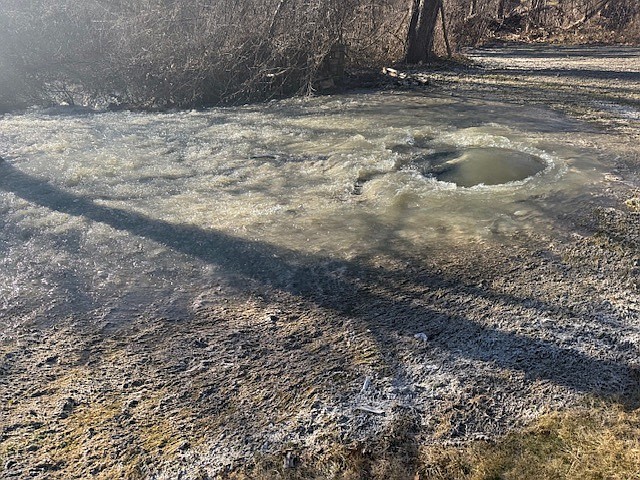
Raw sewage spill in the Potomac River
The Potomac River in the Washington, D.C. area is safe for recreation, DC Water said on March 2, after over five weeks of impaired water quality warnings following the Jan. 19 spill of over 200 million gallons of raw sewage into the river from a ruptured Potomac interceptor. The interceptor is a six-foot-diameter pipe that carries 60 million gallons of raw sewage a day 54 miles, from Dulles Airport to the Blue Plains Treatment plant in southeast Washington, D.C.
Various entities are monitoring the water. DC Water representatives say there has been no leakage since Feb. 8. They built a bypass to reroute wastewater, using pumps and part of the C&O Canal, hoping to complete repairs by mid-March.
Officials insist that drinking water is not affected. Fairfax Water’s intake is located several miles upstream of where the spill enters.
E. Coli, an Indicator
Several entities are conducting water quality sampling, primarily for E. coli. DC Water reports that E. coli levels are steadily decreasing.
DC Water’s website says that variability in E. coli results are common. “For the Potomac River, historical water quality data shows E. coli levels may vary from a range as low as 10 MPN/100mL to as much as 5,000 MPN/100mL on a given day … Swimming is not recommended when E. coli levels exceed 410 MPN/100 mL.” (MPN is an estimate of the microbial concentration in the sample, expressed as MPN per 100 mL (milliliters).
The only acceptable level of E. coli in drinking water is zero MPN/100 mL, according to EPA and other sources.
Alexandria, Fairfax County Impacts
At the request of Virginia Senators Scott Surovell and Richard Stuart and Delegate Paul Krizek, whose districts border the river, on Feb. 17, Virginia’s Department of Environmental Quality (DEQ) collected water samples at 25 locations along approximately 49 miles of the Potomac from the Chain Bridge to the mouth of Potomac Creek in King George and Stafford Counties.
DEQ reported these E. coli levels from those samples at these Northern Virginia stations:
Hunting Creek/Potomac River, 313; Jones Point, 31; Belle Haven Marina, 158; Across from Fort Washington, 10; Little Hunting Creek/Potomac River, 85; Gunston Hall, 20. On Feb. 25, at National Harbor E. coli levels were 105 MPN/100 mL.
On Feb. 13, the Virginia Department of Health (VDH) issued a recreational advisory for 72.5 miles from the American Legion Memorial Bridge (I-495) in Fairfax County to the Harry W. Nice Memorial Bridge in King George County, urging people and pets to avoid recreational water activities, such as swimming, wading, canoeing or kayaking.
With D.C. Water’s March 2 lifting of the advisory that paused recreation use, activities like rowing teams’ practice may resume.
Fairfax County’s Deputy County Executive Jennifer Miller said that the county is monitoring the situation, that “Fecal indicator bacterial monitoring show no ongoing downstream impacts from the sewage release, and no long-term impacts are anticipated now that the spill is contained.”
What Went into the River?
The Choose Clean Water Coalition reports that University of Maryland found the following:
* E. coli bacteria levels at the spill site were literally thousands of times above the water safety limit, 410 MPN, on Jan. 21, 28 and Feb. 3.
* Bacteria levels were over 100 times the contact limit on Feb. 12 and on Jan. 28, E. coli levels were over the safety limit at a site 10 miles downstream from the sewage overflow.
* On Jan. 21 and Jan. 28, Staphylococcus aureus was detected at the spill site and nine miles downstream. Overall, 33 percent of the sampled sites were positive for the pathogen.
* MRSA, an antibiotic-resistant strain of the S. aureus bacteria that causes infections, was identified at the spill site.
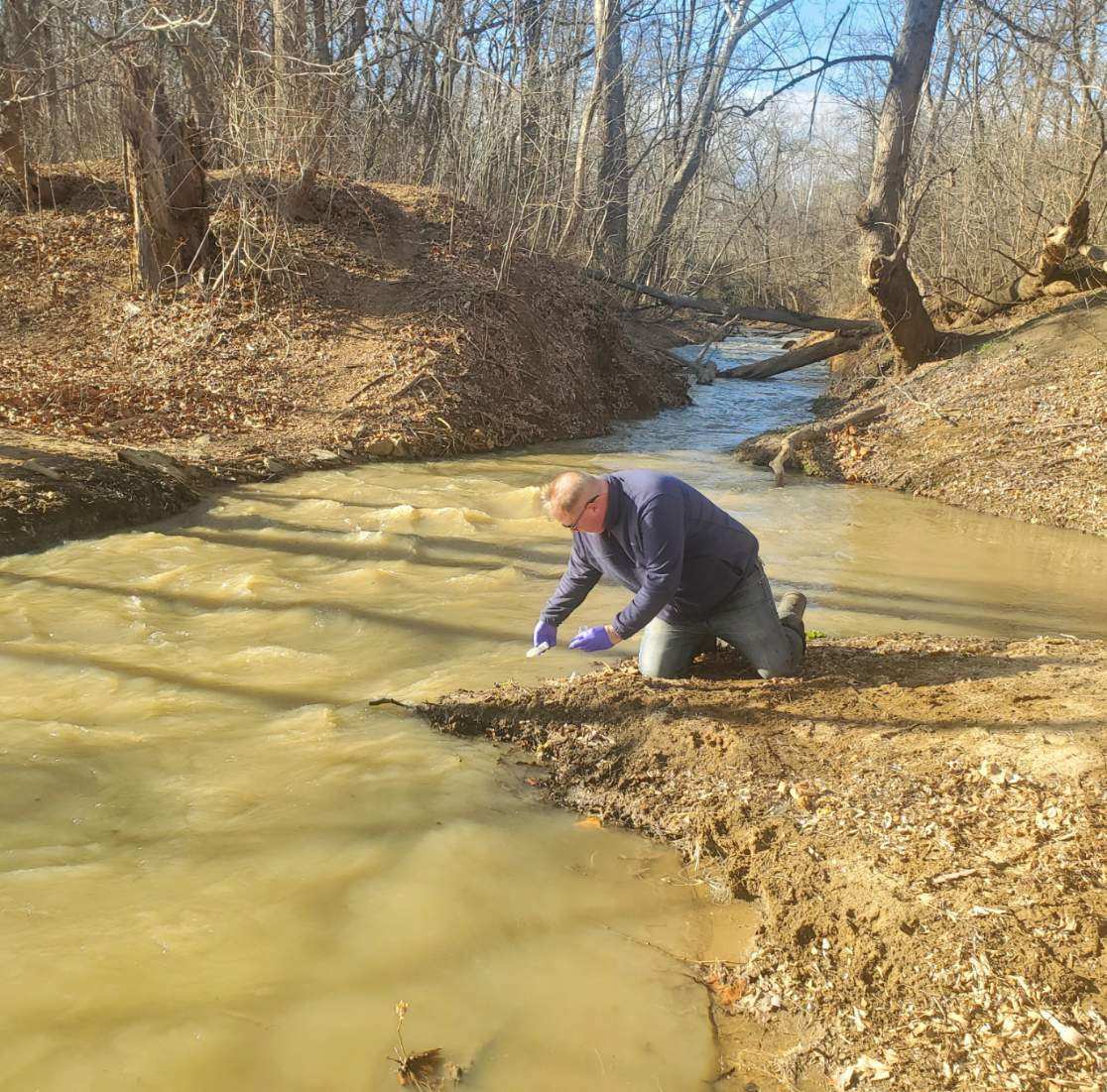 Dean Naujoks of the Potomac Riverkeeper Network is taking many water samples to assess the Potomac River's water quality.
Impacts on People, the Environment
In a Feb. 27 interview, Dr. Joan Rose, an international water microbiology expert at Michigan State University, explained that up to 100 different kinds of pathogens can be found in untreated wastewater at varying concentrations. Levels can peak if many people are sick, for example, during the 2020 COVID pandemic.
“It only takes a few pathogens for us to get sick. For example, if we have one million viruses discharged, even if 99 percent die off, we still have 10,000 viruses. You only need five to ten viruses for us to get sick,” she explained.
Known as “the poop bacteria,” E. coli is a group of bacteria that normally live in the intestines of people and animals. “Everyone has it in their feces. From one to three percent of E. coli are pathogenic,” she said. Other pathogens commonly found in sewage include salmonella, hepatitis A and the norovirus. Pathogens in fecal waste can be “quite persistent,” Rose said, adding, “They can persist in sediments and some can colonize, grow in sediments and last for months.”
Nutrients from sewage, like nitrogen and phosphorus, “can exacerbate hazardous algal blooms, some of which have a toxin that can cause respiratory distress,” she said.
Dr. Rose cited a study by Sam Dorevitch at the University of Illinois of the impacts water contaminated with wastewater on “limited-contact water recreation” like boating, canoeing and fishing. Over three years, he studied 11,297 people and the incidence and severity of illness, associations between water exposure and risk of illness.
He found that limited-contact recreation, both on effluent dominated waters and on waters designated for general use, was associated with an elevated risk of gastrointestinal illness.
Ecological Impacts
How these pathogens affect natural resources “depends on how much and whether they accumulate along the shoreline or an island,” Dr. Rose said. “If water pools, you can get a high organic loading and anerobic conditions which adversely affect benthic and other aquatic organisms that need air to survive. A single sewage spill can have a temporary effect, but consistent inputs of nutrients, from sewage for example, can disrupt ecosystems. A spill is like icing on the cake.”
D. C.’s Department of Energy and Environment (DOEE) reports, “Solids in sewage can smother aquatic habitats. Plants and animals can suffer infections from the bacteria, viruses and other pathogens; they can also suffer from acute toxicity in sewage chemicals. … DOEE is planning fish and wildlife surveys beginning in the spring (some planned as early as late February) that will help indicate if the sewage spill has larger impacts.”
Longer Term Prospects
A Potomac Riverkeeper Network team led by Dean Naujoks has collected water samples at multiple sites. Naujoks urges officials to “look south beyond the Woodrow Wilson Bridge,” and especially to support watermen who make their living from the Potomac. He worries that people will “lose confidence in the river.”
“Blue catfish season starts in March,” he noted in an interview. “Around 3.4 million tons are fished out of the Potomac each year. Will anyone buy and eat it?” Perception is a big concern so his group advocates for daily monitoring. They’ll also work to focus federal dollars on communities impacted for those who make living on the water.
Electeds Call for Funding
Virginia’s Eighth District Congressman, Don Beyer, whose district abuts the river, is highlighting the over-60-year-old sewage system’s vulnerabilities. He led ten other Washington-area members of Congress to seek funds to repair and modernize the Potomac interceptor and urged the U.S. Army Corps of Engineers’ (USACE) to identify a backup water supply for the Washington region, which currently lacks a secondary water source.