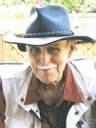
John Ellis McConnell was born Dec. 25, 1931 in Toledo, Ohio and died in Washington, D.C. on Feb. 17, 2008. His father Harry (United Empire Loyalist heritage) held dual Canadian/American citizenship by virtue of his birth in North Dakota during a homesteading journey to Saskatchewan. At the outset of World War I, he was living in Toledo and became an American doughboy. After the war, Harry met Laoda White, married and settled in the Toledo area. Their only child was John. During John’s boyhood years, long bouts of his mother’s ill-health caused him to spend many months at the Southern Ontario farm of Harry’s brother, Lyell. There, he schooled with his young cousins and became firmly attached to the McConnell-McKinnon Canadian relatives, an affection that would last throughout his lifetime.
As a commercial artist, John’s father found work with the National Geodetic Survey (later the U.S. Coast & Geodetic Survey) and moved the family to Washington, D.C. John recalled how his dad was sworn to secrecy during mapmaking assignments throughout World War II. As a teen, John developed a keen interest in all things analytical and technical. After high school, John attended Bell Vocational trade school and trained as a linotype operator (a keyboarding machine that injected molten lead into molds to produce printing type). Following his father’s footsteps, he would begin and end his government career with the U.S. Coast & Geodetic Survey. As a young man in the ‘50s, John also completed stints in the U.S. Navy (submarine) and U.S. Army Reserves. During the late 1940s he and a few close friends donned black leather hats, jackets and pants; purchased Harley-Davidson, Indian, Vincent and Ariel motorcycles, and toured area country roads with pretty girls in tow. Those friends he made would be at his side later through marriage, retirements, holidays and his own funeral. Following a high-speed, highway crash and a hand injury that nearly disabled his linotype livelihood, John purchased a 1954 Austin-Healey 100-4 and graduated to rallies and sports car racing. He accumulated and tinkered on many vehicles throughout his lifetime, but his prized Healey stayed with him. John’s younger Canadian cousin is restoring this classic British sports car in his memory.
During the late 1950s, John purchased a two-story Tudor residence in Alexandria’s Del Ray district and moved his parents into the home with him. Following his parent’s deaths in the 1960s, John discovered love while traveling with friends by train to New York‘s Metropolitan Opera. Jean Evans, a D.C. resident, was also aboard with a friend of the group. They met; a spark ignited; and they married in 1969 settling into the Del Ray home — they were inseparable for 20 years. Jean retired after a 40-year career teaching French at Sidwell Friends School in D.C. Jean succumbed to heart failure in 1989, but John’s many memories and shared experiences with Jean of concerts, parties and traveling would shed light on his single years ahead.
John had an eclectic appreciation for all flavors of music, including opera, jazz, blues, big band, and, most importantly, folk music. His Alexandria home was located within a mile of The Birchmere and it wasn’t long before he and Jean would become fixtures at many of that venue’s performances as well as the House of Musical Traditions in Takoma Park, Md. and a host of other local establishments. Not content to merely sit on the sidelines, John served as a volunteer with the World Folk Music Association (WFMA), looking forward to their concerts each year. A plaque honoring his volunteer service to the organization was awarded to him in 1994. Even with his illnesses of late, John eagerly anticipated WFMA’s Jan. 19, 2008 series that he attended with long-time friends Jim Rosenkrans and Lynn Romano.
Recognized by his trademark black leather hat and sporting his distinctive white moustache, John was known to travel great distances to support the music he loved and eventually he found a home for 17 years at The Reston-Herndon Folk Club, hosted each week at The Tortilla Factory. John recently moved to Herndon to be closer to his musical family. His personal belongings include tickets to nearly every professional concert at TR-HFC during his membership, and his last wish was to purchase the upcoming Nathan Rogers concert. Longtime friend, Shirley Haigh, will sit in his seat. Along with Jim Rosenkrans and in later years, Bill Farrar, John arrived just before 5:30 from Alexandria to set-up the sound equipment in preparation for each Tuesday’s performance, staying at evening’s end to lend a helping hand in storing the equipment before venturing out to the TF parking lot for parting conversation.
John was kind, soft-spoken, and appreciative, but that didn’t mean he wasn’t opinionated. He was a wealth of information, often critiquing and encouraging performers and the sound engineers by bringing in instructional documents or sharing anecdotes to enhance their knowledge. He had an insatiable appetite for life and never lost his curiosity to learn about and listen to new artists.
John was an adventurer, a photographer, a mechanic, a sound engineer, a volunteer, a caregiver, a veteran, a son, an uncle, a cousin, a devoted husband, a friend. He was remembered in song and spirit at Tuesday, Feb. 19’s concert by "Small Potatoes" at the Reston-Herndon Folk Club and at a service and interment on Saturday, Feb. 23.
He is survived by Canadian cousins, nieces and nephews and friends, and the vast musical community he loved and supported.