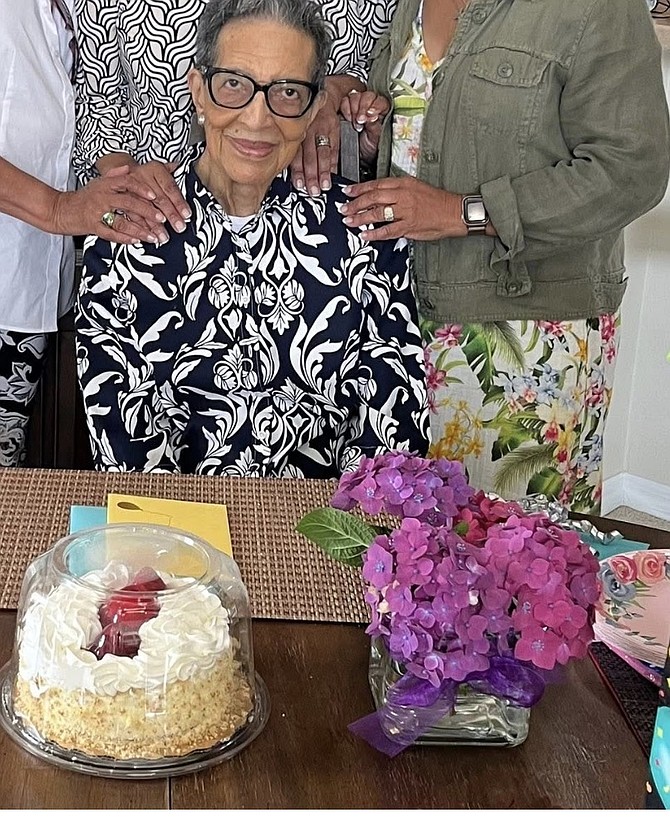
Once a young church volunteer during the Civil Rights Movement, Laverne Carter visits those who have been diagnosed with PTSD, turning her own history into a path for others.
Laverne Carter moves through her days in Arlington with a quiet grace that belies the storms she has carried for decades. Even now at 82, the everyday sounds of her neighborhood — a screen door snapping shut, a bus rolling to a stop — can still transport her back to Mississippi summers when danger lived in every shadow, a reminder of how PTSD lingers long after the violence ends. It is a truth she rarely spoke aloud for most of her life. But in this PTSD Awareness Month, she is sharing the story of how those years marked her.
“Some sounds don’t mean danger anymore, but my body hasn’t gotten the message,” she says, “and that’s the part of PTSD people don’t see,” said Carter.
Her PTSD didn’t come from war, though she says it often felt like one. It came from the long, blistering summers of the Civil Rights movement, when she was just 19 years old. She wasn’t an activist who joined sit-ins or marches, but she was there, taking notes and keeping lists of who needed help.
It was 1963 and as a volunteer at her church in her hometown of Greenwood, she traveled with a small group from her church delivering food to families evicted for trying to register to vote.
“We weren’t trying to be heroes,” Carter remembers. “We were just trying to help our people stay alive long enough to vote.”
Carter remembers those dates the way other people remember birthdays. “June of ’63 was when everything changed.” She recalls the March on Washington and listening to Dr. Martin Luther King Jr’s speech on a radio in the church basement with other women as they fried chicken, boiled collard greens and baked pound cakes.
But the evening that carved itself into her memory came in 1964, during Freedom Summer. She and other church volunteers were assembling meals and preparing them for delivery when a brick shattered one of the church basement windows. She still flinches at sudden noises.
“When you’re eighteen, you don’t realize how long a moment like that can live inside,” she said.
Trying to escape the memories, Carter left Mississippi in 1968, after Dr. King’s assassination, joining cousins who’d moved to Washington, DC. But she learned that trauma travels. For years she startled at slamming doors, avoided fireworks, and slept lightly, always listening for danger.
It wasn’t until 1997, after a panic attack at work, that a psychiatrist at Howard University Hospital finally named what she’d been carrying: post‑traumatic stress disorder.
Therapy followed, cognitive behavioral therapy (CBT), Eye Movement Desensitization and Reprocessing (EMDR), weekly sessions with a psychotherapist and a support group for survivors of violence. She learned grounding techniques, breathing work, and how to recognize when her body was bracing for threats that were no longer present.
Today, Carter manages her PTSD with rituals and community. She attends a weekly session with her therapist, journals each morning, walks the trails at Fort Barnard Park, and attends church. She practices yoga, is part of a faith‑based healing circle and visits patients who have been diagnosed with PTSD, sharing a story that she wishes someone had told her decades ago.
“You don’t have to be silent to be strong and healing is possible,” she says. “But the miracle for me is that I lived long enough to heal.”
Reach Out
If you or someone you know is experiencing symptoms of post-traumatic stress disorder (PTSD), help is available 24 hours a day.
PTSD symptoms can include intrusive memories, avoidance, hyper-vigilance, nightmares, and emotional numbness.
Call or text 988 to reach the Suicide & Crisis Lifeline, where trained counselors provide free and confidential support and can connect callers to local resources.
Veterans can press “1” after dialing 988 to reach the Veterans Crisis Line, or text 838255 for specialized assistance.
In an emergency, call 911 or go to the nearest emergency room.
A formal diagnosis must come from a licensed mental‑health professional