It was the last day of September, a perfect, balmy, fall day, but far from summer’s last gasp at the 25-acre River Farm on a “behind-the-scenes” tour with Tammy Burke, lead horticulturalist there, the national headquarters of the American Horticultural Society on the Potomac River in Mount Vernon.
Thirty plant lovers learned that the gardens “are always evolving,” Burke said, Of all the plants on the property around 70 percent are native and 30 percent non-native. “I believe in letting nature do its thing,” she said. She shuns chemicals. “We only hand weed.”
In designing the varied gardens, Burke strives to have some color from February to November. “I usually use three colors. More than that is chaotic.” She hopes to emphasize purples in 2027.
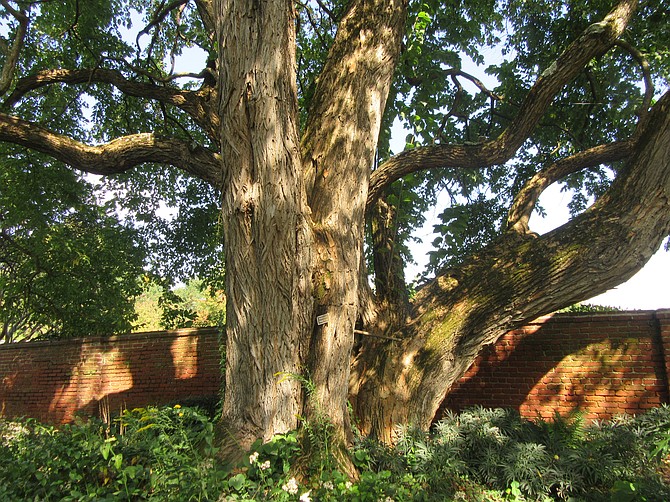
The group started by admiring the massive Osage orange tree, over 200 years old and one of the largest in the United States.
Other standouts included delicate crocuses springing from the ground. “Ants distribute their seeds,” Burke said, so they pop up here and there. Orange zinnias and purple fall asters were luring pollinators, like cabbage white butterflies. Goldenrod blossoms were bumble bee magnets.
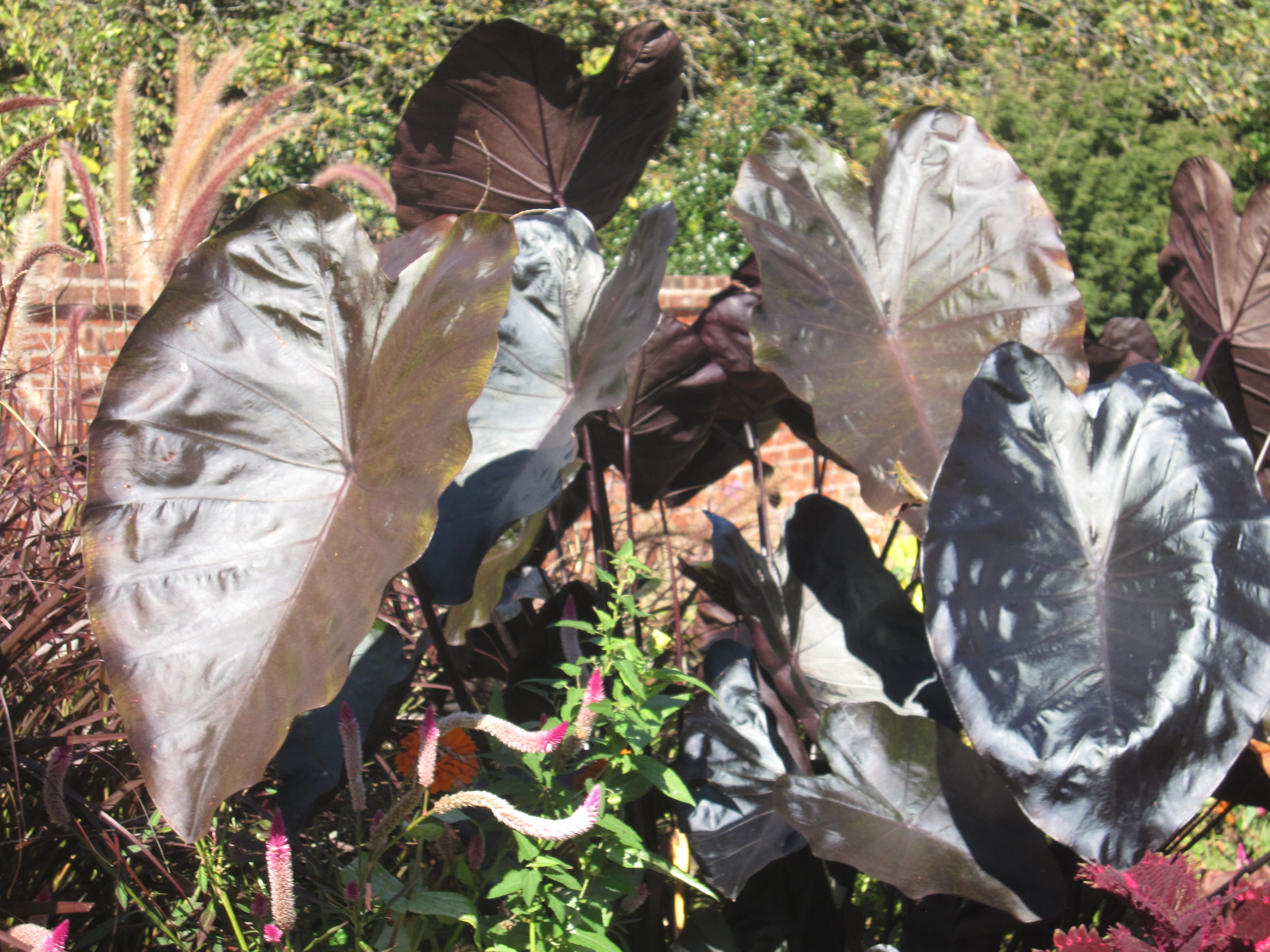
The celosia spicatas with purple spear-like tips were attention getters, squiggling and twisting into the sun. Even the basketball-size, blackish leaves of the Alocasia gleamed. The magnolia trees’ bright red seed pods popped out amid the leaves’ greenery like Christmas decorations. Guests sniffed a salvia that smelled like apples and blue magic basil.
Some of the boxwoods planted in the 1920s by the Malcolm Matheson family, owners of the property from 1919 to 1971, are struggling, due to their age, Burke said, and she may have to redo those areas. From 1919 to 1968, the Mathesons designed and built the gardens, brick walls and other structures.
A Storied History
The land, which George Washington bought in 1760, was the northernmost of his five farms, but he “never slept here,” and mostly grew hemp, Jane Morrison, a docent told the group.
Today, the gardens support thousands of plants. Burke does not know a specific number. River Farm also has woodlands, a meadow, a children’s garden and an active bald eagle nest. Burke has seen coyotes, foxes, deer and other wildlife on the property and volunteers manage bluebird boxes.
As prime, waterfront real estate, River Farm has survived several threats including overtures from the Soviet Embassy in 1971 to convert it into a dacha. When the AHS Board announced it might be sold in 2020, opposition erupted and locals and elected officials launched a campaign to save the property and retain public access. In May 2026, the Northern Virginia Conservation Trust announced a conservation easement which among other provisions prevents subdividing the property, protects the forests and shoreline and provides public access.
The property is a popular site for weddings, birthdays, concerts and other events.
Thanks to the Virginia General Assembly providing funds, AHS has installed new walkways and is now building restrooms, all compliant with the Americans with Disabilities Act.
Founded in 1922, AHS is a member-based, national, nonprofit organization of over 24,000 gardeners, plant enthusiasts, horticultural professionals and partner organizations. AHS welcomes volunteers to weed, mulch, plant plants, deadhead plants and help with other tasks starting in the spring.
To learn more, visit www.ahsgardening.org.